

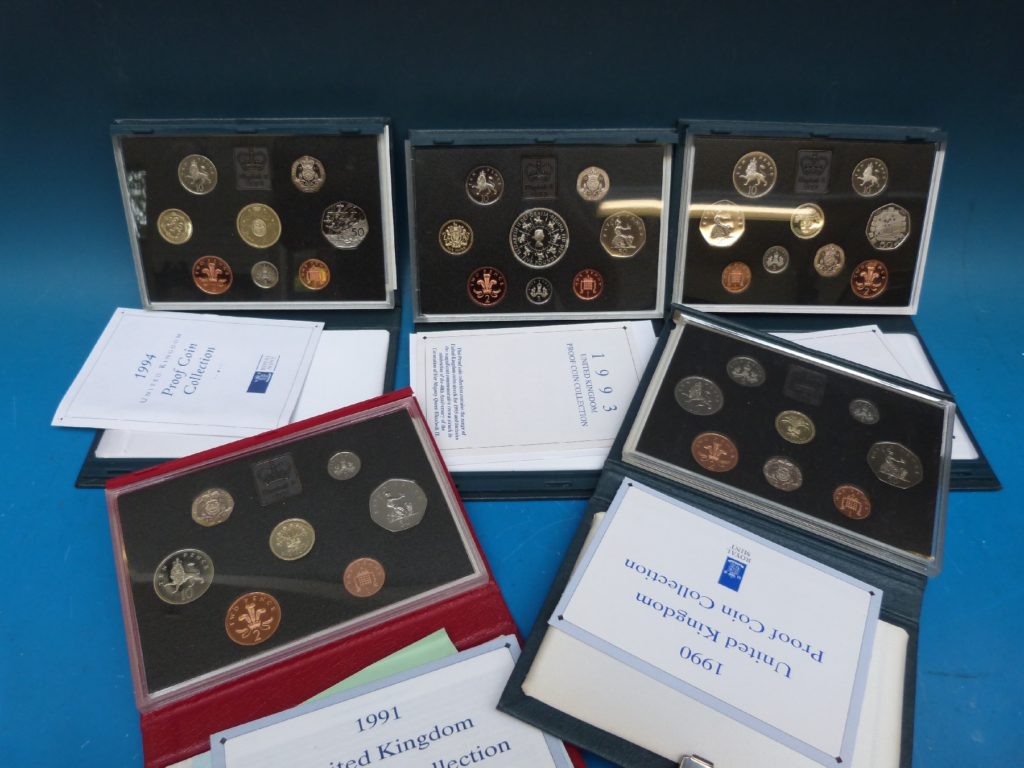
Proof Coin Errors
Proof coins are struck with extraordinary care, using specially prepared planchets and dies, and often receiving multiple strikes to ensure sharp detail and high-quality surfaces. These coins are made exclusively for collectors and not intended for general circulation. Given their specialized production environment, it is highly unusual for errors to occur during the minting of proof coins.
When they do, however, proof coin errors are some of the most valuable and desirable mint errors known. They represent a breach of the highest standards of quality, and collectors prize them not only for their rarity, but for the fact that these mistakes were never meant to leave the mint in the first place.
How Do They Occur?
Proof errors can occur in several ways:
-
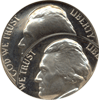
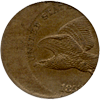
Striking errors, such as off-center strikes, double strikes, or uniface errors.
-
Die errors, including doubled dies or misaligned dies.
-
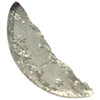
Planchet errors, such as clipped planchets, wrong planchet type, or improper alloy mixtures.
-
Handling errors, such as coins struck with foreign material present or struck through debris.
Because proof coins are inspected more rigorously than standard circulation coins, it is extremely rare for these errors to escape detection. When they do, they become exceptionally collectible.
Recognizing These Errors
Proof coin errors must meet the criteria of a standard error (off-center, struck-through, etc.) while also bearing the hallmarks of a proof coin, such as:
-
Mirror-like fields
-
Frosted devices
-
Sharp strike with full design details
-
Presence of a mint-issued COA or original packaging (in some cases)
Proof error coins are often found encapsulated and certified by major grading services like PCGS or NGC, as authentication is critical for determining true mint-origin errors versus post-mint damage or alteration.
Market and Appeal
Proof coin errors are often the centerpiece of advanced collections. Because of their low mintages and intentional production quality, even minor errors are considered major events. Errors on older proof coins or coins from low-mintage years can be worth significant premiums.
In recent years, certain proof error coins, especially those from the 1950s to the 1970s, have commanded strong prices at auction. Similarly, modern proof errors, such as mis-struck Silver Eagles or State Quarters, have gained popularity due to increased visibility online and at coin shows.
Valuation Chart
Coin Type / Series |
Typical Value Range for Error |
Rare Examples / Notable Sales |
Notes |
|---|---|---|---|
Lincoln Proof Cents |
$100 – $400 |
1950s–1960s double strikes over $1,000 |
Demand is highest for dramatic off-centers or double strikes |
Jefferson Proof Nickels |
$150 – $500 |
1961–1970 with die cap or off-metal errors |
Clean mirrored surfaces are key to higher prices |
Roosevelt Proof Dimes |
$200 – $700 |
1950s full brockage or struck-through errors |
Struck-through cloth or wire seen on occasion |
Washington Proof Quarters |
$300 – $900 |
1960s–1980s partial collar or missing clad layer errors |
Some errors combined with toning fetch higher premiums |
Kennedy Proof Halves |
$300 – $1,200 |
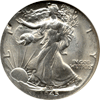
1964-1969 silver planchets with major misstrikes |
Silver proof errors are more desirable than later clad versions |
Silver Proof Eagles |
$500 – $2,500+ |
Multiple strikes, off-center, or wrong planchet errors |
Several modern examples have sold for over $3,000 |
Proof Gold Coins (Modern) |
$1,500 – $15,000+ |
1 oz or 1/2 oz gold pieces with double strikes or die caps |
Highly collectible; grading and authentication critical |
State / ATB Quarters (Proof) |
$250 – $800 |
Off-center or missing clad layer |
Popular with modern error collectors |
Additional Price Guide Entries:
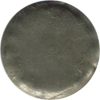
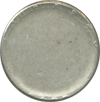
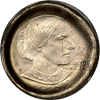
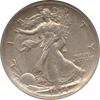
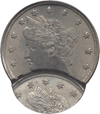
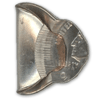
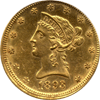
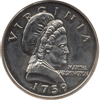
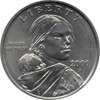
Wrong Planchet / Off Metal Errors
Additional Price Guide Entries:
Wrong Planchet / Off Metal Errors

