
Martha Washington and Test Coins
Martha Washington coins, though not minted for general circulation, hold a special place in U.S. numismatic history. These coins were first created as part of a commemoration, and their uniqueness makes them highly desirable among collectors. As for test piece coins, these are experimental strikes or prototypes made to test new designs, metal compositions, or minting processes. Both types of coins are linked to the development of American coinage and provide insight into early U.S. minting practices.
Martha Washington Coins
Martha Washington, the wife of the first U.S. president George Washington, was depicted on a few special-issue coins, the most famous of which is the Martha Washington Silver Dollar minted in 1982. However, there were earlier designs as well. The first-ever U.S. coin to feature a woman was the 1786 New Jersey Copper, which depicted a likeness of Martha Washington.
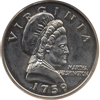
While Martha Washington coins are not as frequently discussed as other historic coins, they have a deep connection to early U.S. coinage. The Martha Washington Half Dollar was authorized in 1900, though it was never produced for circulation. It was meant to honor the first First Lady and was considered a special piece of numismatic history when struck in proof form. The half dollar coin’s design featured a bust of Martha Washington on the obverse with a wreath surrounding her. The reverse of the coin showcased a depiction of Martha in full length.

Test Piece Coins
Test piece coins are experimental or prototype coins that are created to evaluate the design, production process, or metal content before the official release of a coin into circulation. These coins were created during the early years of U.S. minting and have since become highly coveted by collectors due to their rarity and the role they played in the development of U.S. currency.
Test pieces were struck by mints to ensure the final design was viable for mass production. For example, in 1792, the U.S. Mint created experimental coinage to determine which size, weight, and material would be most suitable for circulating currency. These early test pieces were made using different metals, such as copper, silver, and gold, and some examples were even hand-struck by early mint workers.
Valuation Chart
Coin Type |
Year(s) |
Typical Value Range |
Notable Sale / High-End Examples |
Notes |
|---|---|---|---|---|
Martha Washington Silver Dollar |
1982 |
$25 – $150 |
High-quality proof coins can reach over $200+ |
Commonly available in proof condition, but limited mintage makes them collectible |
Martha Washington Half Dollar (1900) |
1900 |
$250 – $1,000 |
A proof specimen can bring $1,000+ |
Rare coin, typically found in very fine or proof condition only |
1786 New Jersey Copper (Martha Washington) |
1786 |
$1,500 – $10,000+ |
Exceptional examples in high grade can bring over $15,000 |
Early American coin featuring a portrait of Martha Washington, highly collectible |
Test Pieces (1792 U.S. Mint) |
1792 |
$5,000 – $100,000+ |
Certain test pieces such as the 1792 Half Dime have sold for over $1 million |
Extremely rare, especially in high condition, as these were prototype coins not meant for circulation |
1792 “Disme” (Test Piece) |
1792 |
$10,000 – $500,000+ |
The 1792 Disme test pieces are extremely valuable and rare |
Some of the first coins struck at the U.S. Mint, with historical significance |
1792 Half Dime (Test Piece) |
1792 |
$50,000 – $1 million+ |
A high-grade test piece of this coin can fetch over $1 million |
One of the first test coins produced by the U.S. Mint, key to early U.S. numismatic history |
Final Thoughts
Both Martha Washington coins and test piece coins hold significant places in the history of U.S. coinage, each offering collectors a unique window into different aspects of the nation’s numismatic heritage.
The Martha Washington coins, although not widely circulated or officially released into general use, are highly prized among collectors for their rarity, historical symbolism, and elegant design. These coins often depict Martha Washington’s portrait and were initially created as test strikes for proposed coinage materials or commemorative issues, making them both aesthetically appealing and historically meaningful. Their connection to one of America’s most iconic First Ladies further enhances their desirability, serving as a tribute to her role in the nation’s formative years.
On the other hand, test piece coins—also known as pattern coins or experimental pieces—are even more elusive and can date back to the earliest days of the U.S. Mint.
These coins were typically struck to evaluate new designs, metals, or production techniques before final versions were approved for mass production. Because they were never intended for public circulation, only a limited number were ever made, and even fewer have survived to the present day. As a result, test pieces are considered treasures among numismatists, often representing pivotal moments in the evolution of U.S. coin design and technology.
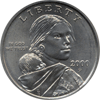
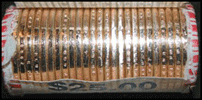
Two other firms under contract by the U.S. Mint include Olin Brass and PMX Industries. Both of these companies supply the U.S. Mint with the manganese-clad strips from which the Sacagawea Dollars are struck. Olin Brass is a leading U.S. copper alloy producer and is located in East Alton, Illinois. PMX Industries is located in Cedar Rapids, Iowa.
Additional Price Guide Entries:
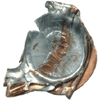
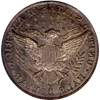
Wrong Planchet / Off Metal Errors
Additional Price Guide Entries:
Wrong Planchet / Off Metal Errors

