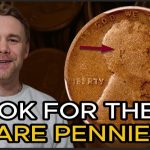
The Lincoln Cent is the most widely collected coin in American numismatic history. Designed by Victor David Brenner and introduced in 1909 to commemorate Abraham Lincoln’s centennial birth anniversary, the series spans over a century of production across three major design eras: the Wheat Reverse (1909–1958), the Memorial Reverse (1959–2008), and the Shield Reverse (2010–Present), alongside the 2009 Bicentennial issues.
MOST VALUABLE PENNIES – Price Guide to Key Dates, Semi Key Dates, and Error Lincoln Cents
00:00:55 – 1909 S VDB Lincoln Cent Value
00:01:51 – 1909 S (No ‘VDB’ Initials) Lincoln Cent Value
00:03:32 – 1909 S/S RPM Error
00:04:14 – 1911 S Lincoln Cent Value
00:04:48 – 1914 D
00:10:08 – 1922 No D Lincoln Penny
00:12:47 – 1924 D Penny Value
00:14:03 – 1926 S Penny Value
00:14:58 – 1931 S Lincoln Cent Value
00:16:43 – 1943 Bronze / Copper Penny Value
00:19:14 – 1944 Steel Cent
00:22:04 – 1955 DDO (Doubled Die Obverse)
00:27:26 – 1969 S Doubled Die FS- 101
00:29:05 – 1970 S Small Date High 7
00:33:36 – 1970 Error Pennies Worth Money
00:37:03 – 1982 Small Date vs Large Date
00:48:43 – 1990 No S Proof
00:49:51 – Close AM vs Wide AM Lincoln Cent Values and Details
01:04:15 – 2019 W Proof
01:06:03 – 2023 Extra ‘V’ Lincoln Cent Error
The Master Key Dates: Low Mintage Grails
       1909-S VDB Lincoln Cent               1914-D Lincoln Cent
  ┌──────────────────────────────┐      ┌──────────────────────────────┐
  │ Mintage: 484,000             │      │ Mintage: 1,193,000           │
  │ Good-4: $600 - $800          │      │ Good-4: $175 - $250          │
  │ MS-65 Red: $3,000 - $10,000+ │      │ MS-65 Red: $10,000 - $35,000+│
  └──────────────────────────────┘      └──────────────────────────────┘
1. 1909-S VDB Lincoln Cent
-
Mintage: 484,000
-
Significance: The undisputed king of regular-issue Lincoln Cents. Designed with Victor David Brenner’s initials (“VDB”) at the bottom of the reverse. Public backlash regarding the prominence of the initials led the Treasury to halt production after just 484,000 coins were struck at the San Francisco Mint.
-
Valuation Breakdown:
-
Good-4 to Very Fine-20: $600 – $1,200
-
About Uncirculated-50: $1,800 – $2,500
-
MS-63 Red: $2,800 – $4,500
-
MS-65 Red: $6,000 – $12,000+
-
2. 1914-D Lincoln Cent
-
Mintage: 1,193,000
-
Significance: Although the mintage is higher than the 1909-S VDB, the 1914-D was not widely hoarded by the public upon release. Most entered heavy circulation, making genuine, high-grade red specimens exceptionally rare.
-
Valuation Breakdown:
-
Good-4 to Very Fine-20: $175 – $650
-
About Uncirculated-50: $1,500 – $2,800
-
MS-63 Red: $4,500 – $7,500
-
MS-65 Red: $12,000 – $35,000+
-
3. 1931-S Lincoln Cent
-
Mintage: 866,000
-
Significance: Struck during the height of the Great Depression when demand for small denomination coinage plummeted. Despite having the second-lowest regular mintage in the series, many were saved in rolls by collectors, making it easier to find in Mint State than the 1914-D.
-
Valuation Breakdown:
-
Good-4 to Very Fine-20: $75 – $115
-
About Uncirculated-50: $140 – $180
-
MS-63 Red: $200 – $300
-
MS-65 Red: $400 – $750
-
4. 1922 “No D” (Strong Reverse – Die Pair 2)
-
Mintage: Included in 1922-D total (7,160,000)
-
Significance: In 1922, only the Denver Mint struck pennies. Heavy die wear and severe die clash damage forced mint workers to polish Die Pair 2 excessively, completely obliterating the “D” mint mark while leaving a crisp, strong reverse image.
-
Valuation Breakdown:
-
Good-4 to Fine-12: $500 – $900
-
Very Fine-20 to About Uncirculated-50: $1,200 – $4,500
-
MS-63 Brown: $12,000 – $25,000
-
MS-65 Red: $80,000+
-
Lincoln Cent Key Dates Price Reference Table
Date / Mint Mark |
Mintage |
Good (G-4) |
Very Fine (VF-20) |
Uncirculated (MS-63) |
Gem Red (MS-65 RD) |
1909-S VDB |
484,000 |
$600 |
$1,100 |
$2,800 |
$8,500 |
1909-S (No VDB) |
1,825,000 |
$90 |
$160 |
$350 |
$1,100 |
1914-D |
1,193,000 |
$175 |
$450 |
$4,500 |
$18,000 |
1922 “No D” (Pair 2) |
Unknown |
$550 |
$1,400 |
$12,000 |
$85,000 |
1931-S |
866,000 |
$75 |
$110 |
$220 |
$500 |
Semi-Key Dates: Essential Collector Targets
                  Early Branch Mint Scarcity
  1910-S (6.0M)   1911-S (4.0M)   1912-S (4.4M)   1913-S (6.1M)
  ┌───────────┐   ┌───────────┐   ┌───────────┐   ┌───────────┐
  │ G-4: $15  │   │ G-4: $40  │   │ G-4: $20  │   │ G-4: $14  │
  │ MS65: $600│   │ MS65: $950│   │ MS65: $700│   │ MS65: $650│
  └───────────┘   └───────────┘   └───────────┘   └───────────┘
Early San Francisco & Denver Issues (1910–1926)
-
1911-S (Mintage: 4,026,000): Extremely scarce in Mint State. A G-4 example trades around $40, while an MS-65 Red reaches $950–$1,500.
-
1912-S (Mintage: 4,431,000): Valued from $20 in worn condition up to $700+ in MS-65 Red.
-
1914-S (Mintage: 4,137,000): Highly sought after due to its association with the 1914-D; ranges from $22 in G-4 to $1,200+ in Gem Red.
-
1924-D (Mintage: 2,520,000): Plagued by soft strikes and heavy circulation. Worn copies sell for $35–$60, but MS-65 Red specimens frequently exceed $4,000.
-
1926-D (Mintage: 4,550,000): Low mintage for the decade. Well-worn coins bring $10, while MS-65 Red specimens clear $3,000 due to poor original strike quality.
Major Error Lincoln Cents: The Six-Figure Anomalies
┌─────────────────────────────────────────────────────────────────┐
│              1943 Copper vs. 1944 Steel Transition              │
├─────────────────────────────────────────────────────────────────┤
│ 1943 Bronze Cent: Struck on leftover 1942 3.11g copper blanks.  │
│ 1944 Steel Cent:  Struck on leftover 1943 2.70g steel blanks.   │
└─────────────────────────────────────────────────────────────────┘
1. 1943 Bronze / Copper Lincoln Cent
-
The Error: In 1943, the U.S. Mint switched to zinc-coated steel planchets to conserve copper for World War II munitions. A handful of bronze planchets from 1942 remained lodged in the tote bins and were struck with 1943 dies.
-
How to Test: Bronze cents weigh 3.11 grams and are non-magnetic. Steel cents weigh 2.70 grams and stick immediately to a magnet.
-
Value Range: $150,000 to $1,700,000+ depending on mint mark (Philadelphia, Denver, or San Francisco) and grade.
2. 1944 Steel Lincoln Cent
-
The Error: The reverse scenario of the 1943 error. When the Mint transitioned back to copper in 1944, leftover 1943 zinc-coated steel planchets were accidentally fed into the presses.
-
Value Range: $30,000 to $400,000+ depending on condition and strike.
3. 1955 Doubled Die Obverse (DDO)
-
The Error: Created when an obverse die received two misaligned strikes from the master hub. The result is dramatic, eye-visible doubling across the date “1955”, “LIBERTY”, and “IN GOD WE TRUST”.
-
Value Range:
-
About Uncirculated-50: $2,200 – $3,200
-
MS-63 Red-Brown: $3,500 – $5,500
-
MS-65 Red: $25,000 – $125,000+
-
4. 1969-S Doubled Die Obverse (DDO)
-
The Error: Among the clearest doubled die varieties in U.S. history. Displays sharp, wide doubling on the obverse lettering and date. (Note: The “S” mint mark is not doubled because it was hand-punched into the die after hubbing).
-
Value Range: $35,000 to $150,000+ in Mint State conditions.
5. 1972 Doubled Die Obverse (DDO – Die 1)
-
The Error: Nine distinct doubled die obverse varieties exist for 1972, but Die 1 is the primary variety. It shows strong doubling angled downward toward the right on “IN GOD WE TRUST”, “LIBERTY”, and “1972”.
-
Value Range: $150 (AU) to $350–$1,000+ (MS-65 Red).
6. Modern Varieties: Close AM vs. Wide AM
      1992 Close AM Reverse                   1999 Wide AM Reverse
  ┌──────────────────────────────┐      ┌──────────────────────────────┐
  │ "A" and "M" in "AMERICA"    │      │ Distinct, wide space         │
  │ touch directly at base.      │      │ between "A" and "M".         │
  │ Value: $1,000 - $25,000+     │      │ Value: $150 - $1,500+        │
  └──────────────────────────────┘      └──────────────────────────────┘
-
1992 & 1992-D Close AM: In 1992, proof dies (which featured a “Close AM” design where the letters A and M in “AMERICA” touch at the bottom) were accidentally used on standard circulation strikes.
-
1992 Philadelphia Close AM: $3,000 – $25,000+
-
1992-D Close AM: $1,000 – $14,000+
-
-
1998, 1999, & 2000 Wide AM: Reverse error where proof reverse dies (Wide AM gap between ‘A’ and ‘M’) were applied to business strikes.
-
1999 Wide AM (Key): $150 (Circulated) to $1,500+ (MS-65 RD)
-
1998 & 2000 Wide AM: $20 – $150 in Mint State.
-
Key Lincoln Cent Errors & Varieties Summary
Variety / Error Description |
Key Diagnostic Feature |
Approximate Market Value |
1943 Bronze / Copper |
Non-magnetic, 3.11 grams weight |
$150,000 – $1,700,000+ |
1944 Steel |
Magnetic, 2.70 grams weight |
$30,000 – $400,000+ |
1955 Doubled Die Obverse |
Extreme doubling on date & legends |
$1,200 – $125,000+ |
1969-S Doubled Die Obverse |
Bold doubling on obverse, single “S” |
$35,000 – $150,000+ |
1972 DDO (Die 1) |
Clear obverse doubling rotated right |
$150 – $1,000+ |
1982-D Small Date Bronze |
3.11g copper weight with Small Date |
$10,000 – $18,000+ |
1983 Doubled Die Reverse |
Bold doubling on “ONE CENT” |
$100 – $400+ |
1984 Double Earlobe |
Distinct second earlobe below Lincoln’s |
$50 – $250+ |
1992 Close AM (Philly) |
Letters ‘A’ and ‘M’ in AMERICA touch |
$3,000 – $25,000+ |
1999 Wide AM |
Wide gap between ‘A’ and ‘M’ on reverse |
$150 – $1,500+ |
Technical Authentication & Color Grading
1. Color Designations (RD, RB, BN)
  ┌─────────────────┐      ┌─────────────────┐      ┌─────────────────┐
  │     Red (RD)    │ ───► │ Red-Brown (RB)  │ ───► │   Brown (BN)    │
  │ >90% Mint Red   │      │ 10%-90% Red     │      │ <10% Mint Red   │
  │ Premium Value   │      │ Moderate Value  │      │ Base Value      │
  └─────────────────┘      └─────────────────┘      └─────────────────┘
-
Red (RD): Retains 90% or more original mint red luster. Commands the highest prices.
-
Red-Brown (RB): Displays between 10% and 90% original mint color.
-
Brown (BN): Less than 10% mint color remaining.
2. Detecting Common Counterfeits
-
Altered 1944-D Cents: Scammers often grind down the left side of the “4” on a common 1944-D penny to mimic a rare 1914-D. Inspect the spacing: a genuine 1914-D has wide, natural spacing between the digits.
-
Added Mint Marks (1909-S VDB & 1931-S): Counterfeiters glue fake “S” mint marks onto Philadelphia coins. Always inspect under 10x magnification for raised glue seams or incorrect mint mark style.
-
Plated 1943 Steel Cents: Standard 1943 steel cents are sometimes copper-plated to deceive buyers. Always use a neodymium magnet and an accurate digital scale (3.11g target weight for genuine bronze).
VarietyErrors
Sign up for FREE News, Videos and Articles!