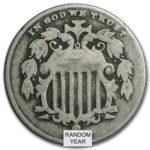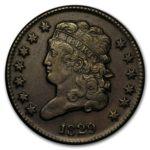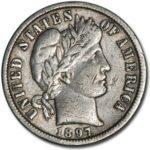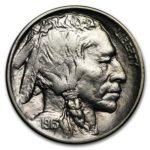
Bust Half Dime
(1794 – 1837)
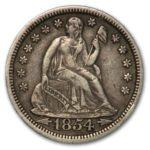
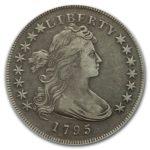
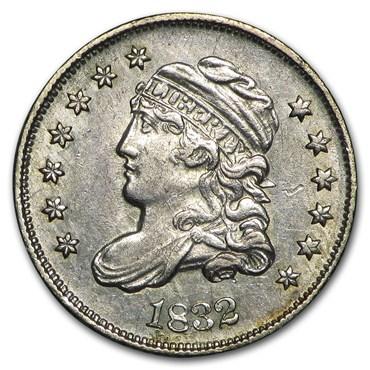
The Bust Half Dime is one of the oldest and most historic coins in U.S. currency history. These little silver coins were struck for circulation from 1794 to 1837 and come in a variety of early American designs. You might have heard of a few: Flowing Hair, Draped Bust (with two reverse types), and Capped Bust. Each version has its own character and charm, and for serious collectors, owning just one is a proud accomplishment.
Types of Bust Half Dimes
There are three primary types of Bust Half Dimes:
-
Flowing Hair (1794–1795) – The very first federal half dimes, and among the rarest.
-
Draped Bust (1796–1805) – These include two subtypes:
-
Small Eagle Reverse (1796–1797)
-
Heraldic Eagle Reverse (1800–1805)
-
-
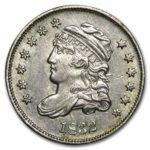
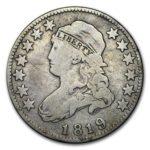
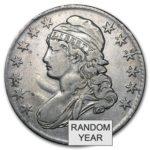
Capped Bust (1829–1837) – The final and most common type of the Bust Half Dimes. More affordable than the earlier types but still highly collectible.
Collectors are often drawn to these coins because of their age, beautiful early American engraving, and the sheer history they represent. They’re also small enough to carry a big story in your collection without taking up too much space!
Valuation Chart
Year |
Type |
Variety / mint mark |
Estimated Price Range |
|---|---|---|---|
1794 |
Flowing Hair |
None |
$4,000 – $20,000+ |
1795 |
Flowing Hair |
None |
$2,500 – $15,000+ |
1796 |
Draped Bust |
Small Eagle |
$6,000 – $25,000+ |
1797 |
Draped Bust |
Small Eagle |
$5,000 – $18,000+ |
1800 |
Draped Bust |
Heraldic Eagle |
$2,000 – $10,000+ |
1801 |
Draped Bust |
Heraldic Eagle |
$2,500 – $12,000+ |
1802 |
Draped Bust |
Heraldic Eagle |
$10,000 – $50,000+ (Key Date) |
1803 |
Draped Bust |
Heraldic Eagle |
$1,800 – $8,000+ |
1805 |
Draped Bust |
Heraldic Eagle |
$1,500 – $6,000+ |
1829 |
Capped Bust |
None |
$60 – $300+ |
1830 |
Capped Bust |
None |
$75 – $350+ |
1831 |
Capped Bust |
None |
$75 – $350+ |
1832 |
Capped Bust |
None |
$70 – $300+ |
1833 |
Capped Bust |
None |
$80 – $375+ |
1834 |
Capped Bust |
None |
$70 – $300+ |
1835 |
Capped Bust |
None |
$80 – $375+ |
1836 |
Capped Bust |
None |
$85 – $400+ |
1837 |
Capped Bust |
None |
$90 – $450+ |
Key Dates, Errors & Notable Varieties
1794 Flowing
The 1794 Flowing Hair Dollar holds an incredibly important place in the history of U.S. coinage as it represents the very first silver dollar struck by the United States Mint. Designed by Robert Scot, the obverse features a youthful Liberty with long, flowing hair—symbolizing freedom—while the reverse displays a small eagle encircled by a wreath. This design was only used for two years, 1794 and 1795, making both issues desirable, but the 1794 issue is especially significant as the inaugural dollar coin struck by the fledgling nation.
Only 1,758 examples were officially struck in 1794, and it’s believed that far fewer survived to the present day—especially in high grades. Due to its historic status, extreme rarity, and direct link to the early operations of the Philadelphia Mint, the 1794 Flowing Hair Dollar is highly sought after by serious collectors and is considered one of the crown jewels of American numismatics. In fact, high-grade specimens have sold for millions of dollars at auction, with one setting a world record for the most expensive coin ever sold publicly. It’s not just a coin—it’s a piece of foundational American history.
1796 Small Eagle Reverse
The 1796 Small Eagle Reverse appears on the early U.S. gold and silver coinage, including dimes, quarters, half dollars, and early gold denominations like the quarter eagle and half eagle. When it comes to the 1796 quarter dollar, this coin is especially notable—it was the first year the U.S. Mint struck quarters, and the only year in which quarters featured the Small Eagle reverse design. That makes the 1796 Small Eagle Quarter a one-year type, which significantly adds to its appeal and rarity.
The reverse shows a delicate, somewhat undersized eagle perched on a cloud and surrounded by a wreath—far more modest in appearance than the Heraldic Eagle that would follow in 1804. Designed by Robert Scot, the Small Eagle motif reflects the Mint’s earliest attempts at creating a distinct national identity through coinage. With a mintage of only 6,146 pieces, and far fewer surviving today in collectible condition, the 1796 Small Eagle Reverse Quarter is considered one of the most desirable early American silver coins. Collectors value it not only for its rarity and low mintage but also for its place as a transitional design during the formative years of the U.S. Mint. It’s a classic example of how early federal coinage blends historic significance, artistic experimentation, and extreme scarcity into one remarkable piece.
1802 Draped Bust
The 1802 Draped Bust Dollar is considered one of the major key dates in the early U.S. silver dollar series and is a highly coveted piece among collectors. Struck during the Draped Bust series (1795–1804), this particular year stands out due to its exceptionally low mintage—official Mint records indicate only 41,650 pieces were struck. However, because of the high rate of melting, circulation wear, and the fragile nature of early dollar coins, surviving examples are far fewer, especially in collectible conditions.
Designed by Robert Scot, the coin features the classic Draped Bust portrait of Liberty on the obverse, with flowing hair and a ribbon, while the reverse displays a heraldic eagle, reflecting the national pride and artistic style of the early Republic. The 1802 issue was among the last regularly dated silver dollars struck before production was halted in 1804.
Its rarity, combined with historical importance and early American design, makes the 1802 Draped Bust a major target for advanced collectors. Even lower-grade examples command strong premiums, and higher-grade pieces can fetch significant sums at auction. Simply put, it’s one of the most desirable coins in early American numismatics.
1829-1837 Capped
The Capped Bust Half Dollars struck from 1829 to 1837 are part of a fascinating period in U.S. coinage, both for their classic design and for the variety of minting quirks that make collecting them especially rewarding. These coins were designed by John Reich (with modifications by William Kneass), and they feature Liberty wearing a capped headdress on the obverse and a bold, heraldic eagle on the reverse.
The coins from this period were struck using closed collar technology, giving them a more uniform appearance and improved edge reeding compared to earlier issues.
What makes this stretch of years particularly interesting to collectors is the sheer number of varieties, especially repunched dates (RPDs) and overdates—where a numeral was punched over a different one (like 1830/29).
Historical Context by Year
-
1794–1795 – The Flowing Hair design reflected the young nation’s aspirations for freedom and simplicity. These were the first federally minted half dimes.
-
1796–1805 – The Draped Bust design, featuring a more mature Liberty and eventually a stronger eagle design, represented a refined vision of America.
-
1829–1837 – Capped Bust coins were smaller, struck on improved machinery, and are more commonly available. They reflect a more stabilized minting process and expanding U.S. economy.
Final Thoughts
Bust Half Dimes are one of the most rewarding and exciting series to collect. Each coin is a piece of living history. Even if you just pick up one from the Capped Bust era, you’re holding a piece of the early American story.
Sure, some of the earlier types will take some deep pockets or a bit of luck to find, but it’s well worth it. Whether you’re working toward a full type set or just admiring the artistry and rarity, these coins always hold strong value and even stronger collector appeal.
Grab one when you can—and if you come across a Draped Bust or Flowing Hair piece, absolutely jump on it!