$ 3 Gold Coin
(1854 – 1889)
The $3 Gold Coin is one of the most unique and underappreciated denominations in U.S. coinage. Released in 1854, the idea behind it was fairly practical — it could be used to purchase a full sheet of 100 three-cent stamps. But despite this niche utility, the coin was never embraced by the public. Usage remained minimal, and its production dwindled in the following years. By the 1870s, mintages were extremely limited, and the series officially ended in 1889.
A major reason this coin failed in circulation was timing. It came at a transitional point in U.S. coinage, with evolving monetary policies and shifting public attitudes about small denomination gold coins. With limited utility and little public support, the $3 Gold Coin was more or less obsolete from the start.
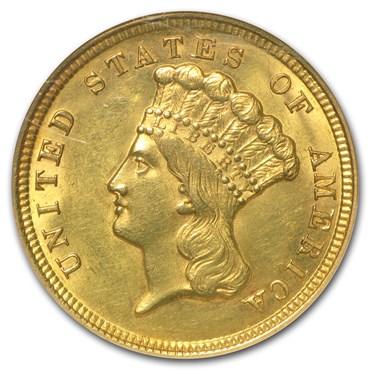
Even though it wasn’t a success in commerce, the $3 Gold Coin is now a prized collector piece — thanks to its low mintage numbers, attractive design, and classic 19th-century appeal.
Design of the $3 Gold Coin
Obverse:
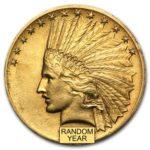
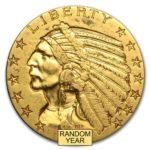
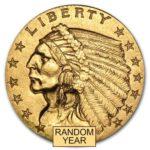
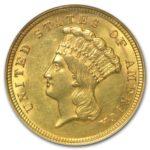
The front of the $3 Gold Coin features the Indian Princess design, created by James B. Longacre. Lady Liberty is shown wearing a feathered headdress inscribed with the word “LIBERTY.”
Reverse:
The reverse shows an agricultural wreath composed of wheat, corn, cotton, and tobacco — representing the major crops of the time. Inside the wreath is the denomination “3 DOLLARS” and the year of issue.
Mint Mark Location:
If applicable, the mint mark appears on the reverse, just below the wreath.
Grading Tip:
For rough grading at home, inspect the knotted ribbon on the reverse and the feather tips on the headdress. If these features are worn flat, your coin is likely in a lower grade.
Sharper detail indicates higher condition and may be worth submitting for professional grading.
Valuation Chart
Year |
Mint Mark |
Mintage |
Estimated Value Range |
|---|---|---|---|
1854 |
None |
138,618 |
$625 – $2,100 |
1854 |
O |
24,000 |
$1,200 – $6,000 |
1855 |
None |
6,600 |
$1,000 – $4,800 |
1856 |
None |
26,010 |
$700 – $3,300 |
1857 |
None |
20,891 |
$725 – $3,400 |
1858 |
None |
2,133 |
$1,600 – $8,000 |
1859 |
None |
15,558 |
$700 – $3,200 |
1860 |
None |
7,036 |
$950 – $4,300 |
1861 |
None |
5,959 |
$1,000 – $5,000 |
1862 |
None |
5,750 |
$1,000 – $5,600 |
1863 |
None |
5,000 |
$1,100 – $5,800 |
1864 |
None |
2,630 |
$1,250 – $6,200 |
1865 |
None |
1,140 |
$2,000 – $8,500 |
1866 |
None |
4,000 |
$1,300 – $6,000 |
1867 |
None |
2,600 |
$1,450 – $6,500 |
1868 |
None |
4,850 |
$1,000 – $4,800 |
1869 |
None |
2,500 |
$1,300 – $6,000 |
1870 |
None |
3,500 |
$950 – $4,900 |
1873 |
Closed 3 |
89,000 |
$750 – $3,700 |
1877 |
None |
1,468 |
$2,800 – $12,500 |
1878 |
Proof Only |
20 |
$12,000 – $16,000 |
1879 |
Proof Only |
30 |
$13,000 – $18,000 |
1880 |
Proof Only |
36 |
$12,000 – $17,500 |
1881 |
Proof Only |
39 |
$11,500 – $16,000 |
1882 |
Proof Only |
40 |
$12,500 – $17,500 |
1883 |
Proof Only |
39 |
$12,000 – $18,000 |
1884 |
Proof Only |
38 |
$12,000 – $18,000 |
1885 |
Proof Only |
41 |
$12,000 – $18,000 |
1886 |
Proof Only |
142 |
$10,000 – $16,000 |
1887 |
Proof Only |
160 |
$9,500 – $15,000 |
1888 |
Proof Only |
291 |
$9,000 – $14,000 |
1889 |
Proof Only |
2,300 |
$3,800 – $9,500 |
Final Thoughts
The $3 Gold Coin is one of those weird, wonderful pieces of U.S. numismatics that kind of flew under the radar when it was minted — but today, it’s a total gem for advanced collectors. Originally introduced in 1854, the $3 denomination never really caught on with the general public. It was a little too oddball for everyday commerce, and even back then, folks weren’t quite sure what to do with it. But that low popularity is exactly what makes it so desirable now — the mintages were small, the survival rates are even lower, and the result is a gold coin that’s as rare as it is beautiful.
It features a stunning design by James B. Longacre, with an Indian Princess motif on the obverse and a wreath of corn, wheat, cotton, and tobacco on the reverse — basically a tribute to American agriculture at the time. That artistry, combined with the fact that it’s real 19th-century U.S. gold, gives it an unbeatable appeal for collectors who like depth and story in their coins.
From an investment perspective, you’ve got a solid baseline with its gold content, but the real value comes from rarity, grade, and collector demand. Key dates like the 1854-D or the ultra-rare 1870-S are trophy-level pieces. Even the more “common” dates are hard to find in high grades, and prices can climb fast once you get into AU or Mint State territory.
Bottom line — if you’re building a serious collection or portfolio, the $3 Gold Coin absolutely deserves a spot. It’s not a beginner coin by any means, but if you’re ready for the challenge, it’s one of the most rewarding series out there. Just know going in: they’re rare, they’re pricey, and they don’t come around often. But when they do — they’re pure numismatic gold.