
Wrong Planchet Coins
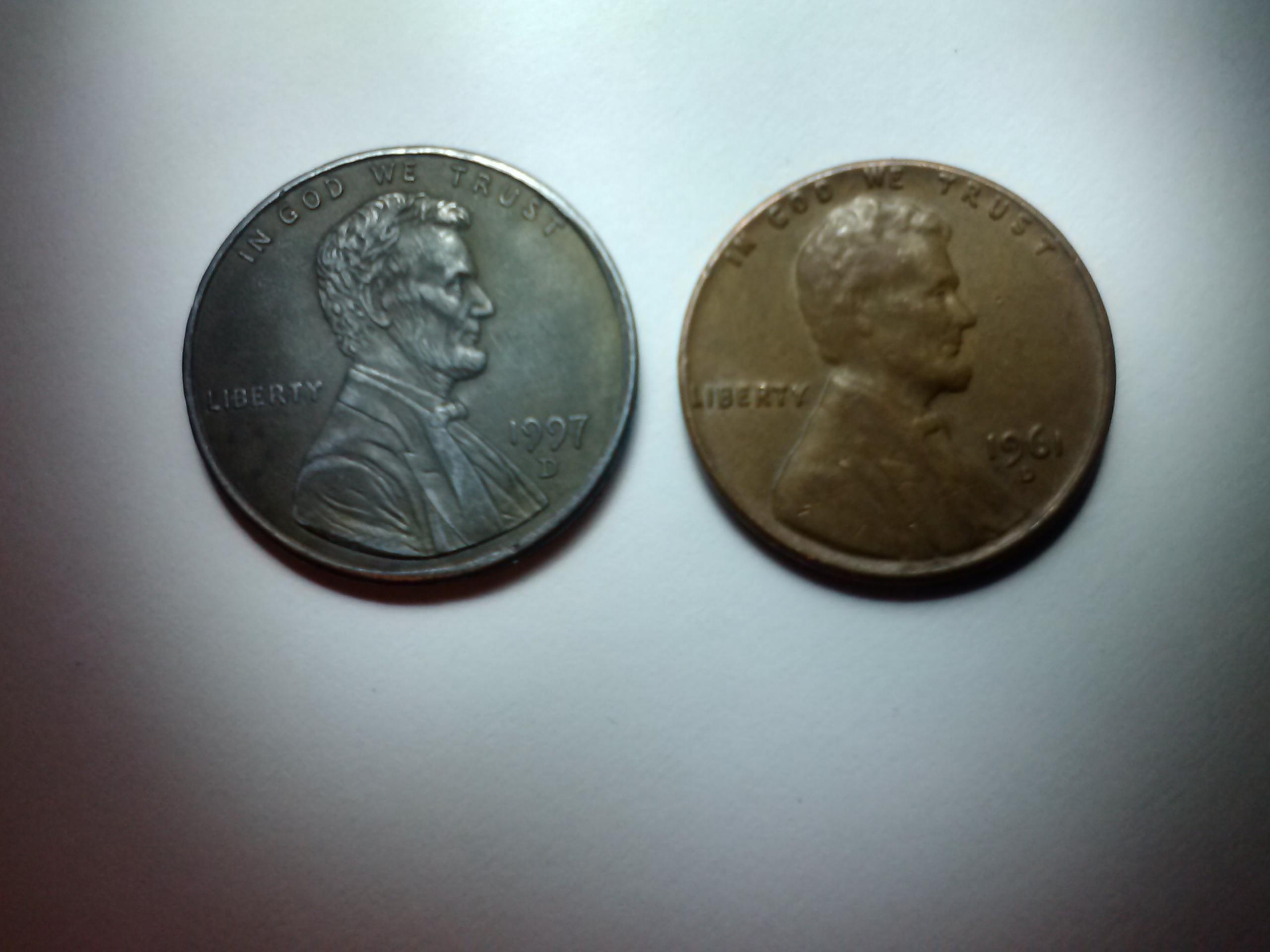
Wrong planchet coins are some of the most fascinating and collectible errors in numismatics. They occur when a planchet (coin blank) intended for one denomination ends up being struck with the dies of another denomination. This can create coins that look strange, feel odd in weight or size, and raise immediate interest from seasoned collectors and casual searchers alike.
For example, a Lincoln Cent struck on a dime planchet would come out thinner and made of a completely different metal composition. These mistakes are possible during high-volume production runs, when planchets for multiple denominations are being processed in the same facility.
How Do They Occur?
This error happens at the planchet feed stage, before striking:
-
The wrong size or metal planchet is fed into a coin press intended for a different coin.
-
The dies strike the mismatched planchet, creating a coin with the design of one denomination on the blank of another.
-
Since the press adjusts to the collar and shape of the expected planchet, parts of the design often do not fully strike, especially around the rims.
Commonly Confused Terms
Let’s break this down clearly, because several error types get lumped together:
-
Wrong Planchet – Design of one coin, struck on the planchet of another. (e.g., Cent design on dime blank)
-
Double Denomination – A coin that was struck twice, with the second strike from dies of a different denomination. (e.g., Cent struck first with Cent dies, then with Dime dies)
-
Double Strike / Multi-Strike – A coin struck more than once with the same dies.
-
Mule – A different class of error: a coin struck with two dies never meant to go together. These are extremely rare (e.g., a coin with a Quarter obverse and Dollar reverse).
A wrong planchet error is most easily identified by size, weight, and visible missing portions of the design that were unable to fully strike on a smaller (or thinner) planchet.
Transitional Wrong Planchets
There’s another layer to this error class: transitional wrong planchets. These occur when the mint changes the metal composition in a new year but some old planchets are left in the feed tubes. If a coin shows a new year’s date but is struck on the previous year’s metal, this is a highly desirable and well-documented class of error.
Example: A 1983 Cent struck on a 95% copper planchet, despite copper being phased out after 1982. These fetch a premium due to the metal content being different than intended.
Valuation Chart
Coin Type (Design on Planchet) |
Typical Value Range |
Notable Sale / High-End Examples |
Notes |
|---|---|---|---|
Lincoln Cent on Dime Planchet |
$250 – $1,000+ |
Some high-grade pieces exceed $2,000 |
Missing rims, partial designs common |
Lincoln Cent on Foreign Planchet |
$100 – $500 |
Rare planchets (e.g., Bahamas, Canada) raise value |
Confirm metal composition if unsure |
Jefferson Nickel on Cent Planchet |
$300 – $1,200 |
Often shows strike weakness |
Weight is key to authenticating |
Dime on Cent Planchet |
$400 – $1,500 |
Thin coins with washed-out rims |
Certified examples in MS condition command premiums |
Quarter on Nickel Planchet |
$500 – $1,800 |
Design often won’t fit fully on smaller blank |
Easily confused with broadstrikes – check diameter |
Quarter on Dime Planchet |
$1,000 – $2,500+ |
Rarity increases with clean strike |
Look for dates during transitional mint periods |
State Quarter on Cent Planchet |
$750 – $2,000 |
Eye-catching; strong demand |
Unmistakable color and design conflict |
Final Thoughts
Wrong planchet errors are some of the most dramatic and desirable coins in the error market. While many of them are easy to spot with the naked eye, authenticating through a grading service (NGC, PCGS, ANACS) is always recommended, especially before buying or selling.
Fake examples and altered coins do exist, but real ones command strong premiums — especially in high grade or transitional metal types.
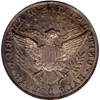
A much rarer error is a denomination struck on a foreign planchet. This did occur occasionally with United States (and before that American colonial) coinage in the 17th, 18th, and 19th centuries, and then very rarely in the 20th century.
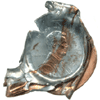
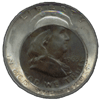
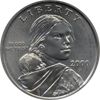
Wrong planchet and off-metal errors occur when a correctly made blank from one denomination is accidentaly fed into a press for another denomination. Examples are a nickel struck on a cent planchet and a cent struck on a dime planchet.
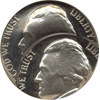
The coin struck on an incorrect blank will weigh exactly what the denomination of that blank would have been. An even more dramatic wrong planchet error is a coin struck on a previously struck coin of a different metal.
Additional Price Guide Entries:
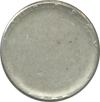
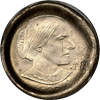
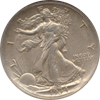
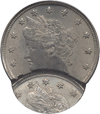
Wrong Planchet / Off Metal Errors

