
Partial Collars
Partial collar errors are subtle at first glance, but extremely exciting once you know what to look for. These errors happen during the striking process when the collar — the metal ring that holds the coin in place during minting — doesn’t engage fully. The result? One part of the coin is properly formed, while the other side mushrooms out, creating a distorted, uneven edge known as a “railroad rim.”
These coins are called “railroad rim” errors because the edge often resembles a train rail — flat on one side and raised or spread out on the other. While not as visually extreme as a fragment error or broadstrike, partial collar coins are a favorite among error collectors due to their unique formation and high visual appeal once identified.
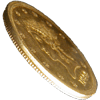
How Do They Occur?
In a standard coin strike, the collar ensures the coin’s diameter is correct and applies reeding (those vertical lines on the edge of dimes, quarters, etc.).
Here’s what happens in a partial collar strike:
The collar doesn’t fully rise into position when the planchet is struck.
As a result, part of the coin’s edge is formed normally, and part is allowed to expand outward.
The affected area appears flattened or spread, and depending on the angle of strike, the edge may tilt or slope, creating the iconic railroad-track effect.
Sometimes these errors are minor and easily missed — other times, they’re dramatic and clearly visible without magnification.
Common Misidentification
Partial collar errors are sometimes confused with:
Off-center strikes – but these show incomplete design elements, which partial collar coins usually do not.
Double thickness planchets – those are a planchet issue, not a striking problem.
Post-mint damage (PMD) – such as coins run over or crushed, which usually show severe impact marks or irregular damage not consistent with strike pressure.
A real partial collar error will still show proper strike detail on the face of the coin but with a clear rim irregularity. You can often feel the rim distortion with your fingers.
What to Look For:
Railroad rim appearance (flat edge + expanded side)
Visible tilting or sloping on coin edge
Date and design should be complete
Check for even strike pressure across both sides
While not always flashy, partial collar coins are an essential piece of error collecting and offer insight into the striking mechanics of coin production.
Valuation Chart
Coin Type | Typical Value Range | Premium Examples / Notable Sales | Notes |
|---|---|---|---|
Lincoln Cents | $25 – $75 | Strong collar spread can reach $150+ | Most common; often found in bank rolls or bulk lots |
Jefferson Nickels | $30 – $100 | More dramatic examples can top $200 | Look for clean railroad rim and centered design |
Roosevelt Dimes | $40 – $120 | Silver era coins command higher prices | Key dates or high grades push value upward |
Washington Quarters | $75 – $200 | 1960s silver coins can exceed $300+ | Look for rim spread with strong detail |
Kennedy Half Dollars | $100 – $400 | Larger coins show dramatic spread; silver = premium | Good condition 1964 issues draw collector interest |
Sacagawea / Presidential $1 | $75 – $250 | Modern partial collars are fairly dramatic | Look for double rim effect or rotation on edge lettering |
Gold Coins (any era) | $4,000 – $15,000+ | Incredibly rare – museum or auction level material | Seen occasionally in private auctions or major collections |
Final Thoughts
Partial collar errors may not be the biggest showstoppers in error collecting, but for those who appreciate the minting process and mechanical intricacies, they’re a must-have. They’re also far more affordable than many other error types, especially in modern denominations.
As always — verify through reputable grading services if you’re unsure, especially when buying higher-end or silver/gold examples. Faked damage on the rims does exist, and third-party certification is always worth it.
Additional Price Guide Entries:


Wrong Planchet / Off Metal Errors
Additional Price Guide Entries: