
Multi- Struck Coins
Multi-strike errors are among the more fascinating and rare coin errors you’ll encounter as a collector.
These errors occur when a coin is struck more than once, usually with different dies or orientations, often leading to a misaligned or overlapping design on the coin’s surface.
While the coin may be properly fed into the press at first, a malfunction in the minting process causes the coin to be struck multiple times. The result is often a coin with a “double” or “triple” design, where one design impression overlaps with another or a second strike creates an additional layer of the same design.
This error is highly prized among collectors because of its uniqueness, and depending on the severity and nature of the strike, these coins can become highly valuable and sought after. Multi-strike errors are rarer than you might think, and collectors actively look for them in coin rolls or at auctions.
How Do They Occur?
A multi-strike error can occur in several ways, and typically there are two main types:
Multiple Strikes with Same Dies: This occurs when a coin is struck multiple times with the same set of dies. The coin may be slightly misaligned during each strike, causing the design to overlap or the coin to be struck in multiple places.
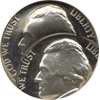
Multiple Strikes with Different Dies: Sometimes, a coin can be struck with one set of dies, and then fed back into the press to be struck with a different die, often from a different denomination. This results in an overlapping of two different designs on the same coin.
Both of these multi-strike scenarios lead to coins that feature multiple impressions of the design, making them visually distinct and collectible.
Multi- Strikes Vs. Other Errors
It’s important to understand the distinction between multi-strike coins and double-strike coins:
Double-strike errors generally occur when a coin is struck twice with the same die but misaligned, resulting in two impressions that may not line up.
Multi-strike errors can involve multiple strikes with one or more dies, creating complex errors where parts of the design overlap.
The key difference is that multi-strike coins are more complex and generally involve more than two strikes, often with different dies or orientations, while double strikes typically involve two impressions from the same die.
Valuation Chart
Coin Type | Typical Value Range | Notable Sale / High-End Examples | Notes |
|---|---|---|---|
Lincoln Cent (Modern) | $25 – $150 | Extreme multi-strikes can fetch $300+ | Common for modern coins, but rare examples can be valuable |
Lincoln Wheat Cent (1909-1958) | $50 – $250+ | Early coins, especially with overlapping design, may fetch $500+ | Collectors value extreme overlap and clarity of error |
Jefferson Nickel | $50 – $200 | Higher value for coins with strong, overlapping impressions | Rarer multi-strike nickels with distinct designs fetch more |
Buffalo Nickel | $100 – $500 | Multiple strikes on these older coins can see big premiums | Older coins with multi-strikes in strong condition are rare |
Mercury Dime | $75 – $500 | Older examples with multiple strong strikes command higher premiums | Multiple impressions on these dimes increase collectability |
Roosevelt Dime | $50 – $300 | High-quality multi-strikes from the 1940s and 1950s are highly prized | Examples in better condition are worth significantly more |
Washington Quarter | $150 – $500 | High-demand years from the 1930s and 1940s with visible overlap fetch premium prices | Quality and visibility of the error affect value |
Standing Liberty Quarter | $200 – $1,000+ | Pre-1930s coins with multi-strike errors are valuable | Older quarters with strong, multiple impressions are rare |
Kennedy Half Dollar | $75 – $400 | Strong multi-strike examples from earlier years can bring $500+ | Rarer the error, more valuable the coin |
Sacagawea Dollar | $200 – $1,000+ | Modern multi-strikes of Sacagawea dollars are popular with collectors | Multi-strikes from early years fetch significant interest |
Final Thoughts
Rarity and Collectability: Multi-strike errors are particularly rare and much sought after because of the distinct overlap of designs. The complexity of these errors adds to their allure for collectors.
Condition Matters: The condition of a multi-strike coin plays a significant role in determining its value. Coins that show clear, overlapping strikes without too much wear are especially prized.
Increasing Rarity with Age: As with many error coins, older multi-strike coins tend to be more valuable. For example, a multi-strike from a pre-1930s quarter will typically command a higher price than one from the 1980s or 1990s.
Market Demand: The market for multi-strike coins is always shifting. Certain years or types (like Mercury Dimes or Buffalo Nickels) may see higher demand, and thus higher prices, based on collector interest at the time.
Additional Price Guide Entries:
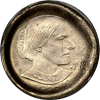
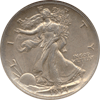
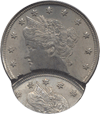
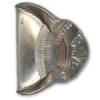
Wrong Planchet / Off Metal Errors