
Indent Coins
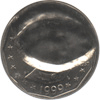
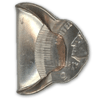
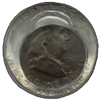
Indent errors are a fascinating and relatively uncommon type of coin error that occurs during the minting process. These errors happen when a coin is partially struck by a die, resulting in an indentation or depression in the coin’s surface.
The cause of this error typically lies in a problem with the minting press, such as improper alignment or an incorrectly placed planchet. This results in the coin being struck unevenly, creating the indentations that collectors find so interesting.
Indent errors can range from minor, barely noticeable dings to significant indentations that are obvious and prominent. In some cases, these errors may involve multiple strikes, creating multiple indentations or impressions on the same coin. These coins often have a unique look that sets them apart from other error coins, and as a result, they are highly sought after by collectors of unusual minting defects.
Types of Indent Coins
Indent errors can take several forms, depending on how the coin was struck and the degree of misalignment or malfunction of the minting equipment. Here are a few common types of indent errors that collectors may encounter:
Single Indent Error:
This is the most common form of indent error, where the coin has one or more indentations from an incomplete strike. The indentations usually occur along the edge or in the center of the coin, depending on how the planchet was positioned during the minting process.Multiple Indentation Errors:
In some cases, a coin may experience multiple indentations from being struck more than once or due to misalignment of the dies. These errors can result in the coin appearing like a “punched” piece of metal, with distinct depressions scattered across the surface.Die Clash Indent Error:
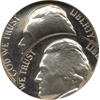
Sometimes a die clash can occur, where the two dies briefly touch without a planchet in between, leaving an imprint on one of the dies. If a planchet is struck after the dies have clashed, it may produce indentations or marks corresponding to the design of the other die. These can result in an indent that appears to be an impression from a foreign design.Partial Indent Errors:
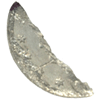
A partial indent happens when the coin is struck only on one portion of the planchet, leaving the rest of the coin unmarked or lightly struck. This type of error can create an oddly shaped coin with a small but visible indentation.
Market for Indent Error Coins
Indent errors are generally considered valuable because they are a result of a malfunction during the minting process, which makes them relatively rare. While these coins are not as common as some other types of errors, they are still highly regarded by error collectors. The uniqueness of each indent error coin adds to its appeal—since no two indentations will look exactly the same, every coin with an indent error is essentially a one-of-a-kind piece of minting history.
Additionally, the degree of the indent can play a significant role in determining a coin’s value. Coins with deep indentations, multiple errors, or particularly interesting patterns will often command a higher price than those with minor or shallow indentations.
Valuation Chart
Coin Type | Typical Value Range | Notable Sale / High-End Examples | Notes |
|---|---|---|---|
Lincoln Cent (Modern) | $50 – $500 | Indented coins with significant marks can reach up to $1,000+ | Shallow indentations are more common, but deep ones attract higher values |
Lincoln Wheat Cent (1909-1958) | $100 – $600 | Multiple indentations or deeper impressions can push values higher | Coins from the 1940s with strong indentations are prized |
Jefferson Nickel | $75 – $400 | A deep indent in a rare date may fetch over $500 | The more dramatic the indent, the more valuable the coin |
Mercury Dime | $150 – $1,200 | Coins with a pronounced indent, especially from early years, have higher premiums | Well-preserved indent error coins with historical significance can reach over $1,000 |
Roosevelt Dime | $100 – $500 | Well-struck indents on dimes from the 1950s or 1960s can be worth more | Less common indent errors in high-grade coins are more desirable |
Washington Quarter | $200 – $1,500 | Rare date quarters with multiple indentations can bring over $1,000 | Earlier quarters, especially those from the 1930s, are highly coveted |
Standing Liberty Quarter | $250 – $2,000+ | Indent errors from pre-1930s quarters are considered highly valuable | High-grade examples with deep indentations can fetch top-dollar |
Final Thoughts
Scarcity and Rarity: Indent error coins are valuable because they represent a rare malfunction in the minting process. These coins are often unique, with each indentation looking slightly different, adding to their charm and collectability.
Condition: As with all error coins, the better the condition of the indent error coin, the higher its value. A well-preserved coin with clear and distinct indentations will generally sell for more than one that shows significant wear or damage.
Error Complexity: More complex indentations—those that involve multiple strikes or overlapping errors—are often the most prized and can see substantial value increases, especially if they are from a rare or historically significant year.
If you happen to find an indent error coin, it’s a unique opportunity to hold a rare piece of minting history in your collection. While these coins are not as common as some other types of error coins, their rarity and appeal to collectors make them a valuable addition to any collection.
Additional Price Guide Entries:
Wrong Planchet / Off Metal Errors
Additional Price Guide Entries: