
Double Denomination Coins
Double denomination errors are some of the most visually dramatic and desirable errors in all of coin collecting. These unusual pieces result from a coin being struck more than once, each time by dies of two different denominations.
This can lead to remarkable and confusing visual effects, where two entirely different coin designs coexist on one piece of metal — an unintentional hybrid of American currency.
This type of error should not be confused with a wrong planchet error, which involves a blank of the wrong metal or size entering the striking chamber. A true double denomination error happens when a coin is already struck once, then re-fed (intentionally or by mistake) into a second coin press of a different denomination, where it is struck again by different dies.
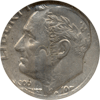
The result? A single coin that bears the design elements of two separate denominations, often layered atop one another.
How Do They Occur?
These errors generally occur under a very specific (and rare) set of circumstances:
A coin of one denomination is already struck (for example, a cent).
This already-struck coin is accidentally sent into the striking chamber for another denomination (say, a dime or quarter).
It is then struck again using the second set of dies.
The final coin shows details from both denominations — one partially overlaid on the other.
The mechanics required for this error to occur are extremely uncommon, especially in modern mint facilities. That rarity, coupled with the fascinating look of the resulting coins, is what makes double denomination errors so prized.
Types of Double Denomination Errors
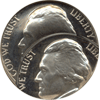
Dime on Cent: A previously struck cent is struck again by dime dies. Often both Lincoln and Roosevelt appear together.
Cent on Dime: The opposite — a struck dime receives a cent strike.
Nickel on Cent or Dime: Less common but still collectible.
Quarter on Cent, Dime, or Nickel: These are especially valuable due to dramatic size and design conflicts.
Half Dollar or Dollar on Smaller Denominations: Extremely rare due to the size difference and tight quality control at mints.
Modern Examples: Can include state quarters, presidential dollars, and other newer coinage.
Valuation Chart
Type of Double Denomination | Typical Range (Circulated) | High-End Examples (Certified) | Notes |
|---|---|---|---|
Cent on Dime | $500 – $1,200 | $2,000 – $3,500+ | Very popular type; high visual contrast |
Dime on Cent | $400 – $1,000 | $1,800 – $3,000+ | Similar in appearance to above; value varies with clarity |
Nickel on Cent or Dime | $600 – $1,300 | $2,000 – $4,000+ | Good contrast; scarcer than cent/dime pairings |
Quarter on Cent or Dime | $1,000 – $3,500 | $5,000 – $10,000+ | High value due to dramatic visual differences |
Half Dollar on Cent, Nickel, or Dime | $2,000 – $6,000+ | $10,000 – $25,000+ | Rare due to large planchet differences |
Dollar Coin on Smaller Denomination | $2,500 – $7,500+ | $15,000 – $30,000+ | Extremely rare; often only found through mint error releases |
Note: Valuations depend on visual clarity of both denominations, completeness of overstrikes, and whether the piece is certified by PCGS or NGC.
Final Thoughts
Authentication is Essential: These coins are heavily counterfeited or altered. Only purchase examples that are authenticated and encapsulated by top-tier grading services.
Visual Appeal: Coins where both denomination designs are clearly visible fetch much higher prices.
Mint State Examples: Uncirculated double denomination coins are exceptionally rare and can command massive premiums.
Crossover Demand: These pieces are sought after not only by error collectors, but also by specialists in each involved denomination, increasing demand and price.
Double denomination coins are in a league of their own when it comes to mint errors. These aren’t just mistakes — they’re the kind of wild, once-in-a-blue-moon slipups that make collectors do a double take (pun fully intended). Imagine a Roosevelt Dime struck over a Lincoln Cent, or a Jefferson Nickel layered with elements of a Washington Quarter. These coins are literal mashups — two denominations, one planchet, all thanks to a perfect storm of minting mishaps.
What makes them so exciting is that they hit all the collector sweet spots: rarity, eye-catching visuals, and serious behind-the-scenes intrigue. They spark curiosity — how did this even happen? Was the original coin already struck and then re-fed into the press? What presses were involved? Every double denomination has its own backstory, and that’s part of what makes them so addictive.
They’re also flat-out cool to look at. You might see parts of both designs—like a ghost image of Lincoln’s profile peeking out from behind Roosevelt’s, or overlapping legends and dates.
Additional Price Guide Entries:

Wrong Planchet / Off Metal Errors
Additional Price Guide Entries: