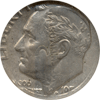
Coin Fragments
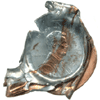
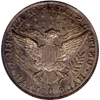
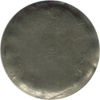
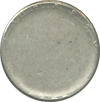
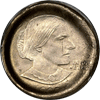
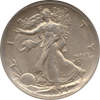
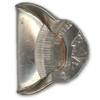
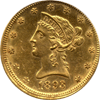
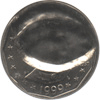
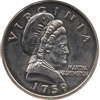
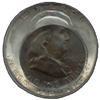
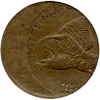
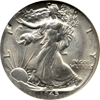
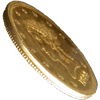
The blanking press takes the coils of metal strips and punches blanks out of it, ejecting the webbing at the other end. The webbing is cut into small scrap pieces to be melted and recycled. Occasionally a scrap piece will be mixed with the blank planchets and struck by the dies. Struck fragments are rare in the larger denominations. These can be uniface or die struck both sides and are very rare on type coins.
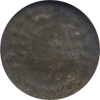
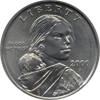
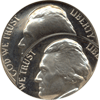
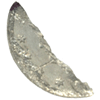
Coin Fragments Examples:
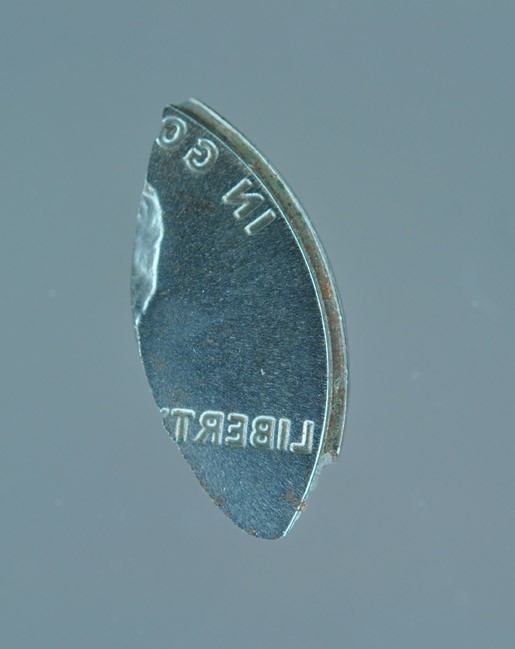
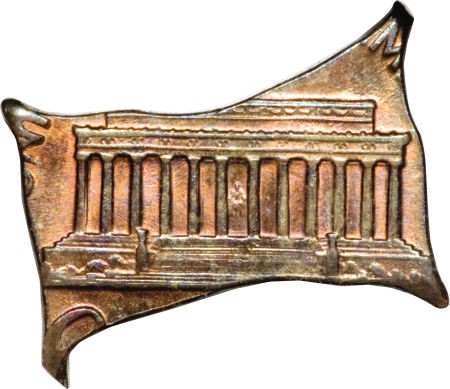
Fragments
Fragment errors, also known as incomplete
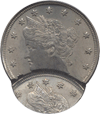
planchet errors, occur when a coin is struck on a blank that is missing part of its full circular form. This typically happens during the cutting process when a metal strip is punched into planchets and one is only partially cut — leaving a jagged or crescent-shaped “fragment” instead of a complete coin blank.
These types of error coins are dramatic, visually striking, and highly collectible. A fragment error is immediately obvious to even the most casual collector, which makes them popular across all levels of the hobby. However, genuine fragment errors are far rarer than many assume — especially when it comes to U.S. coins that passed through quality control at the Mint.
How Do They Occur?
Fragment errors occur before striking — in the blanking stage of the minting process. Here’s how it usually happens:
A coin blank (planchet) is only partially punched from the metal sheet, leaving it with a missing section.
This malformed blank is then mistakenly fed into the striking press, where it is struck like a normal coin — but without a full surface area.
The result is a coin with a curved edge, sharp corners, or a jagged bite missing, all while still bearing normal strike detail on the visible portion.
Sometimes, the coin will also be off-center, or feature additional striking errors due to the irregular shape of the planchet.
Authenticating a Fragment
Due to their irregular appearance, fragment errors are occasionally faked or altered post-mint. To ensure authenticity:
Edges should be examined for flow lines and proper metal texture.
Strike pressure will often fade near the break point — this is a good sign.
Coins should ideally be certified by a third-party grading service (PCGS, NGC, ANACS) to ensure legitimacy.
Coins that are clipped after minting, or damaged post-production, are not considered true errors and hold little value.
Scarcity and Value
Fragment errors are uncommon, especially on older coins or precious metal coins. They are most often seen on modern copper or clad coins like Cents, Nickels, or Dimes. The more complete the design on the fragment — especially if the date is visible — the more desirable the coin.
Coins that still exhibit a partial portrait, readable date, or full denomination tend to command the highest prices.
Valuation Chart
Coin Type | Typical Value Range | Premium Examples / Notable Sales | Notes |
|---|---|---|---|
Lincoln Cent Fragments | $40 – $150 | Over $300 if date/mint mark present | Most common fragment error — easily found and collected |
Jefferson Nickel Fragments | $50 – $200 | Dramatic shapes or full design fragments $400+ | Less frequent than Cents, especially on older dates |
Roosevelt Dime Fragments | $75 – $250 | Large size loss with design visible can reach $500 | Silver-era dime fragments command stronger prices |
Washington Quarter Fragments | $100 – $400 | 25–50% missing fragments with visible features | Higher premiums for pre-1965 silver versions |
Kennedy Half Fragments | $200 – $700 | Rare; full strikes on fragments may hit $1,000+ | Heavier weight and larger surface area make these errors dramatic |
State Quarter Fragments | $100 – $300 | Odd shapes or dual errors (e.g., struck-through) | Often collected alongside modern error types |
Gold Coin Fragments | $5,000 – $20,000+ | Very rare; high-end collectors only | Only a handful of authenticated examples known; major auction items |
Final Thoughts
Fragment errors are among the most visually dramatic and instantly recognizable mint errors. If you’re someone who enjoys collecting coins with unique physical traits, these are an excellent series to chase. You may come across one in bulk lots or unsearched rolls, but high-quality pieces often show up at auction or from specialized error dealers.
Additional Price Guide Entries: