
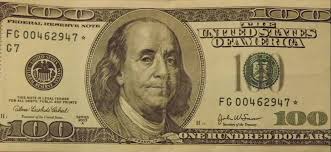
The $100 bill, featuring the iconic portrait of Benjamin Franklin, is the highest denomination currently issued for public use. While every “Benjamin” is a welcome sight, certain historical series and seal colors are worth significantly more than their $100 face value. From the Red Seal Legal Tender Notes of 1966 to the 1928 Gold Certificates, these high-denomination bills are centerpiece items for serious currency collectors.
Because $100 was an immense amount of money during the Great Depression and WWII, very few people could afford to save these notes in “Uncirculated” condition, making “Gem” survivors from those eras extremely scarce.
How Banknotes Are Graded
When dealing with $100 bills, grading accuracy is paramount. A shift from “About Uncirculated” to “Choice Uncirculated” can result in a value swing of hundreds or even thousands of dollars.
-
Average Circulated (VF to EF): These notes show signs of use but remain intact. A Very Fine (VF) note may have several folds and light smudging, while an Extremely Fine (EF) note is nearly new with only 1–3 light vertical folds. Both must have a semi-crisp surface and no tears.
-
Uncirculated (UNC / CU): Also called “Crisp Uncirculated,” these notes are in new condition with no wear, no fold marks, and feature perfectly SHARP corners.
-
Gem Uncirculated: A “Gem” note contains all the UNC aspects but also features deep, hard-impressed colors and exceptional centering. These are highly sought after at auction and command the highest premiums.
Pro Tip: Modern $100 Star Notes (Series 1996 and newer) are generally common, but older Star Notes—especially from the 1950s—are rare “replacement” issues that collectors pay heavily for.
🔗 Check your Star Note rarity here: Star Note Lookup and Mintage Data
$100 Banknote Valuation Chart (Small Size)
Values are market averages. National Bank Notes (Brown Seals) from rare towns or specific “Charter” banks can be worth significantly more.
Series |
Seal Color |
Note Type |
Circulated (VF/EF) |
Uncirculated (UNC) |
Star Note (UNC) |
1928 |
Gold |
Gold Certificate |
$110 – $700 |
$2,500+ |
n/a |
1928 (A) |
Green |
Fed Reserve |
$100 – $200 |
$250 – $350 |
Rare |
1929 |
Brown |
Nat. Currency |
$100 – $200+ |
$200+ |
n/a |
1934 (A-D) |
Green |
Fed Reserve |
$100 – $150 |
$225.00 |
Rare |
1950 (A-C) |
Green |
Fed Reserve |
$100 – $125 |
$200 – $250 |
$450 – $600 |
1950D |
Green |
Fed Reserve |
$100 – $125 |
$300.00 |
$750.00 |
1950E |
Green |
Fed Reserve |
$110 – $130 |
$175.00 |
$725.00 |
1966 |
Red |
Legal Tender |
$110 – $150 |
$300.00 |
$1,000+ |
1966A |
Red |
Legal Tender |
$125 – $200 |
$1,000.00 |
Rare |
1969-1993 |
Green |
Fed Reserve |
Face Value |
$105 – $150 |
$150 – $250 |
1996-Pres. |
Green |
Fed Reserve |
Face Value |
$100 – $105 |
$105 – $125 |
High-Value $100 Rarities to Watch For
1. The 1966 & 1966A Red Seal (Legal Tender)
These are the only small-size $100 notes to feature a Red Seal. They were issued to satisfy a legal requirement to keep a certain amount of United States Notes in circulation. Because they were printed in relatively small quantities compared to Federal Reserve Notes, they are instantly collectible. The 1966A is particularly difficult to find and carries a massive premium in Uncirculated condition.
2. 1928 Gold Certificates (Gold Seal)
Before 1933, the $100 bill was essentially a receipt for five $20 gold coins. These feature a distinct Gold Seal and gold serial numbers. High-grade survivors are very rare because the 1933 gold recall forced most people to turn them in. A “Gem” example today can easily clear $5,000 at auction.
3. The 1950D & 1950E Star Notes
While the standard 1950 series $100 bills are fairly common, the Star (*) versions of the D and E series are “sleeper” rarities. If you find a 1950D or 1950E with a star in the serial number, you have a note worth between $500 and $750 even with some light circulation.
4. 1929 National Bank Notes (Brown Seal)
These were issued by individual banks across the country. A $100 note from a major city like Chicago is worth a modest premium, but a $100 note from a small-town bank with a “Rare Charter” can be worth $1,000 to $5,000+.
Click the Denomination Below to See Values
$1 || $2 || $5 || $10 || $20 || $50 || $100 || $500 || $1,000

