
| US Paper Currency Pricing Information and Banknote Price Guide | ||||||||||||||||||
|
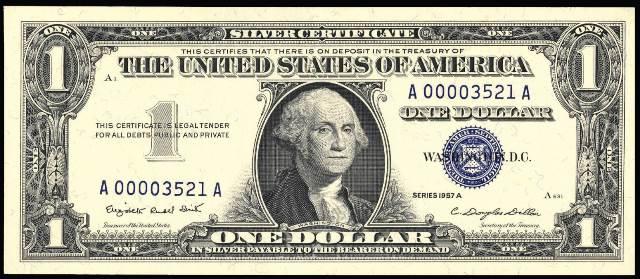
Welcome to the Variety Errors Banknote Price Guide. Whether you’ve found a Blue Seal Silver Certificate, a Red Seal Note, or a mysterious “Star Note” in your change, this guide provides the real-world market values and grading standards you need to accurately appraise your collection. Click the Denomination Below to See Values$1 || $2 || $5 || $10 || $20 || $50 || $100 || $500 || $1,000What is “Small Size” US Currency?Small-size notes are the banknotes we use today, first introduced in 1928. Unlike the “Large Size” (or “Horse Blanket”) notes issued prior, these notes feature standardized dimensions. While many are common, specific seal colors, serial numbers, and signatures can elevate a standard $1 bill into a thousand-dollar rarity. |
||||||||||||||||||
Understanding Seal Colors & Emergency IssuesNot all US currency is green. During the 20th century, the Treasury used color-coded seals to denote different types of backing or emergency status:
How to Identify Rare Varieties1. The Series Date and LetterSmall size notes often feature a letter after the date (e.g., Series 1934A). This letter changes whenever the Treasurer of the United States or the Secretary of the Treasury changes, or if there is a minor design revision. Some “letter” combinations are significantly rarer than others. 2. Star Notes (Replacement Currency)When a banknote is damaged during the high-speed printing process, it is replaced with a Star Note. Look for a “★” symbol at the end of the serial number. Because these are produced in much lower quantities than standard runs, they almost always carry a premium.
Banknote Grading: The Key to Real ValueA note’s value is 10% history and 90% condition. We categorize small-size notes into four primary tiers:
|
Click the Denomination Below to See Values
$1 || $2 || $5 || $10 || $20 || $50 || $100 || $500 || $1,000
|| Credit: KM Franck

