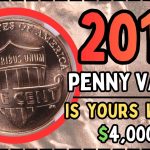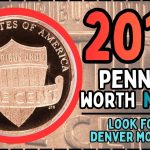
Do you have a jar of loose change sitting on your dresser? Are you curious if those everyday pennies you’ve collected are worth more than their one-cent face value? You aren’t alone. Hundreds of thousands of collectors are actively hunting for the rare and valuable errors hidden within one of America’s most common coin series: The Lincoln Memorial Cent (1959 to 2008).
While most pennies are only worth a cent, certain years, mint marks, and specific varieties from this five-decade run can sell for tens, hundreds, or even thousands of dollars. Our accompanying video is a comprehensive visual breakdown, timestamped year-by-year, showing you exactly how to identify these elusive treasures. This article is your optimized guide to understanding the values, key errors, and crucial historical changes within the series.
🏆 Key Takeaways: What You Need to Know Fast
Question |
Short Answer |
Which Lincoln Memorial Cents are worth the most? |
Look for prominent “Doubled Die” errors, transitional composition errors, or key date proof strikes. The 1969-S Doubled Die is legendary. |
How can I tell if my penny is rare? |
Use a magnifying loupe to inspect the date, lettering, and mint marks. Compare your coin to images of known varieties, especially regarding composition and doubled lettering. |
Are standard, circulated pennies worth money? |
Generally, pennies from 1959 to 1981 are 95% copper and are worth approximately 2 cents in metal value. Pennies from 1983 onward are zinc and are face value unless they are a rare error or variety. |
What is a “Red” coin? |
Cents come in three color designations based on oxidation: Red (RD), Red-Brown (RB), and Brown (BN). A full “Red” uncirculated coin is the most desirable and fetches the highest price premiums. |
What is the “Single-Squeeze” process? |
A modern manufacturing method introduced fully around 1997. It was meant to eliminate doubling errors but instead created a new, subtler error known as Class 9 (IX) doubling, which appears in the center of the coin rather than the edges. |
Part 1: Foundations of the Series (1959–1981)
The Lincoln Memorial design debuted in 1959 to commemorate the 150th anniversary of Abraham Lincoln’s birth. The reverse features a detailed image of the Lincoln Memorial, replacing the older “Wheat Ears” design.
Essential Identification Factors
Before checking the year-by-year guide, understand these concepts:
-
Mint Marks: This letter, found below the date, tells you where the coin was struck: D (Denver), S (San Francisco), or No Mint Mark (Philadelphia).
-
Composition Matters: Until mid-1982, pennies were composed of 95% copper and 5% zinc/tin. These are considered “Copper Pennies” and have an inherent metal value above one cent.
-
Color Classifications (The Video covers this at 1:30:00): Coins are graded as:
-
RD (Red): 90% or more of original red luster. Most valuable.
-
RB (Red-Brown): 10-90% red luster. Moderate premium.
-
BN (Brown): Less than 10% red luster. Generally standard value unless an error.
-
Part 2: Detailed Year-by-Year Value Guide
Use the timestamps below to jump to the exact minute in the video where we visually demonstrate each coin’s value and crucial identifying markers.
🎥 The Early Years (1959–1969)
This decade contains foundational key dates and some of the most dramatic doubling in the entire series.
-
[0:02] 1959 Lincoln Cent: The inaugural year. Values for uncirculated coins are strong, especially in full “Red” condition.
-
[3:21] 1960 Lincoln Cent: Features two distinct varieties: Small Date and Large Date. The Small Date (especially the Philadelphia strike) is scarcer. We show you exactly how to differentiate them.
-
[5:33] 1961 Lincoln Cent Value
-
[10:04] 1962 Lincoln Cent Value: The copper composition was slightly modified this year, eliminating tin.
-
[13:47] 1963 Lincoln Cent Value
-
[16:59] 1964 Lincoln Cent Value
-
[20:11] 1965 Lincoln Cent Value: Note that standard circulation production this year was very high.
-
[24:18] 1966 Lincoln Cent Value
-
[28:22] 1967 Lincoln Cent Value
-
[32:49] 1968 Lincoln Cent Value: Production of proof coins for collectors moved back to the San Francisco Mint starting this year, identified by the ‘S’ mint mark.
-
[36:44] 1969 Lincoln Cent Value: We cover the 1969-D and standard issues, but you must look for the ultimate modern holy grail this year: The 1969-S Doubled Die Obverse. We visually analyze what dramatic doubling looks like—the lettering of “LIBERTY” and the date are visibly repeated, sometimes worth over $100,000 in high grades.
🎥 The Transition Era (1970–1981)
-
[41:21] 1970 Lincoln Cent Value: Look for the 1970-S Small Date variety, which is significantly more valuable than the Large Date.
-
[45:26] 1971 Lincoln Cent Value
-
[51:06] 1972 Lincoln Cent Value: We highlight the 1972 Philadelphia Doubled Die Obverse. While not as famous as the 1969-S, it is prominent and worth several hundred dollars.
-
[58:22] 1973 Lincoln Cent Value
-
[1:04:22] 1974 Lincoln Cent Value
-
[1:11:09] 1975 Lincoln Cent Value
-
[1:16:33] 1976 Lincoln Cent Value
-
[1:22:54] 1977 Lincoln Cent Value
-
[1:28:13] 1978 Lincoln Cent Value
-
[1:35:14] 1979 Lincoln Cent Value
-
[1:42:04] 1980 Lincoln Cent Value
-
[1:48:37] 1981 Lincoln Cent Value
🛑 Stop and Read: Understanding the Great 1982 Pivot
In mid-1982, the U.S. Mint pivoted away from expensive copper composition to a much cheaper copper-plated zinc core (99.2% zinc). Zinc cents weigh 2.5 grams, while older copper cents weigh 3.11 grams.
🎥 The Seven Varieties of 1982
You must use a scale to check any 1982 penny! Collectors are hunting for the combination of correct composition, date size (Small vs. Large), and mint mark. The Mint produced seven official varieties:
-
Philadelphia, Small Date, Copper (3.1g)
-
Philadelphia, Small Date, Zinc (2.5g)
-
Philadelphia, Large Date, Copper (3.1g)
-
Philadelphia, Large Date, Zinc (2.5g)
-
Denver, Small Date, Zinc (2.5g)
-
Denver, Large Date, Copper (3.1g)
-
Denver, Large Date, Zinc (2.5g)
The Discovery Coin: Collectors believe a 1982-D Small Date Copper (3.1g) must exist as a “transitional error,” but only two have ever been confirmed. They are worth extraordinary sums. We show you the subtle date differences in the video.
Part 3: The Modern Era (1983–2008)
Pennies from 1983 onward are almost entirely face-value zinc, UNLESS they are an uncirculated “Red” coin or a rare error.
-
[2:04:41] 1983 Lincoln Cent Value: Look for the 1983 Doubled Die Reverse (DDR). Doubling is obvious on “ONE CENT” and “UNITED STATES OF AMERICA.”
-
[2:10:38] 1984 Lincoln Cent Value: Check for the 1984 “Doubled Ear” error. Lincoln appears to have two earlobes. We provide a magnified close-up.
-
[2:15:04] 1985 Lincoln Cent Value
-
[2:18:53] 1986 Lincoln Cent Value: Check for major DDO doubling on Lincoln’s eye.
-
[2:23:21] 1987 Lincoln Cent Value
-
[2:27:38] 1988 Lincoln Cent Value
-
[2:32:39] 1989 Lincoln Cent Value
-
[2:38:07] 1990 Lincoln Cent Value
-
[2:45:11] 1991 Lincoln Cent Value
🎥 The Close AM vs. Wide AM Errors (1992–1999)
The shape of the letter ‘A’ and ‘M’ in “AMERICA” on the reverse changed slightly between business strikes and proof strikes. Errors occurred where standard coins were struck with the wrong die.
-
[2:53:16] 1992 Lincoln Cent Value: You must check every 1992-P and 1992-D. The standard coin is “Wide AM” (AM letters are far apart). If the AM letters are nearly touching at the base, you have a 1992 Close AM Transitional Error. It is extremely rare and worth thousands. We visually demonstrate how to measure the gap.
-
[3:47:56] 1999 Lincoln Cent Value: The reverse scenario occurred this year. The rare variety is the 1999 Wide AM Business Strike. Look for a wide gap between the AM letters on a standard circulation coin.
-
[3:01:35] 1993 Lincoln Cent Value: Transition to standard Close AM on standard business strikes.
-
[3:07:44] 1994 Lincoln Cent Value
-
[3:15:02] 1995 Lincoln Cent Value: Check for the 1995 Philadelphia DDO. Strong doubling on “LIBERTY” and “IN GOD WE TRUST” is easy to spot without magnification. It is relatively common as doubled dies go, but still worth well over face value.
-
[3:24:29] 1996 Lincoln Cent Value
Part 4: The Impact of Single-Squeeze Hubbing (1997–2008)
Between 1997 and 1999, the U.S. Mint fully transitioned all coin manufacturing from the older “multiple-squeeze” method to the modern “single-squeeze” hubbing process.
The End of Famous Doubled Dies
This technological change had a profound impact on error identification:
-
Multiple-Squeeze (Older): Dies needed 2 or more separate, high-pressure hits to transfer the complete design from a master hub. If the hub or die shifted between hits, you got dramatic, spread-out doubling on the edges and periphery (like the 1955 or 1969-S).
-
Single-Squeeze (Modern): A single, high-pressure hit creates the entire design. The U.S. Mint intended this to eliminate doubled dies forever. However, the immense pressure sometimes causes the hub to “shift” or “tilt” at the moment of contact.
🎥 Single-Squeeze Doubled Dies (Class 9)
If a single-squeeze shift occurs, it creates a new type of error: Class 9 (IX) Doubling. This doubling is almost always found in the center 1/3 of the design, rather than around the outer lettering.
Look for a “jolt” or slight rotation of central elements. We provide magnified examples in the video, such as:
-
[3:31:43] 1997: Subtle shifting on the reverse pillars of the Lincoln Memorial.
-
[3:39:43] 1998: Center elements show Class 9 doubling.
-
[3:57:01] 2000 Lincoln Cent Value: Multiple Class 9 doubled dies on the reverse pillars.
-
[4:32:50] 2005 Lincoln Cent Value: Doubling shows as extra thickness on the central obverse elements and reverse pillars.
-
[4:48:06] 2007 Lincoln Cent Value
-
[4:55:55] 2008 Lincoln Cent Value: The final year of the Memorial reverse.
Part 5: Rarity, Rarity, Rarity: Comparing Errors
The crucial takeaway for modern modern collectors is understanding complexity:
-
Class 1-8 (Pre-1996): Visible to the naked eye, dramatic, worth significant money. Rare because they are prominent and hard for the mint to miss.
-
Class 9 (1997-Present): Subtle, often require high magnification, generally rarer in number of examples known, but collectors often overlook them. Finding one is a great “sleeper” opportunity.
The true value of modern coins lies in condition rarity. A common 1996 cent that is graded an MS-68 or MS-69 Red by a professional service (like PCGS or NGC) can be worth thousands, strictly because it is functionally perfect and has no discoloration.
Conclusion: Time to Check Your Jars!
Don’t dismiss a coin just because it looks common. The most valuable treasures in modern numismatics, from the 1992 Close AM to subtly rotated columns on a 2000 cent, look exactly like standard pocket change at first glance. Use our timestamped video as your visual guide, grab your magnifying loupe, and start searching!
RARE FINDS AHEAD! Are you hunting hidden wealth?
Join our community and dive deeper into the world of currency and collectibles!
Connect with Me:
-
👍 Facebook: https://www.facebook.com/profile.php?id=100083139551911
-
📸 Instagram: https://www.instagram.com/varietyerrors/
HELPFUL LINKS: Explore Our Free Resources
Visit our website VarietyErrors.com to access ALL of our coin price guides, banknote price guides, and breaking news. They are FREE to access!
-
🆓 Star Note Lookup: https://varietyerrors.com/star-note-lookup-and-data/
-
📈 2026 MARKET INDEX: Get the Alternative Asset Valuation for your coins at VarietyErrors.com.
-
📚 My Book on Amazon: If you want a deep dive, check out our guide on Amazon: https://www.amazon.com/dp/B0BTWVQY4C
VarietyErrors
Sign up for FREE News, Videos and Articles!